


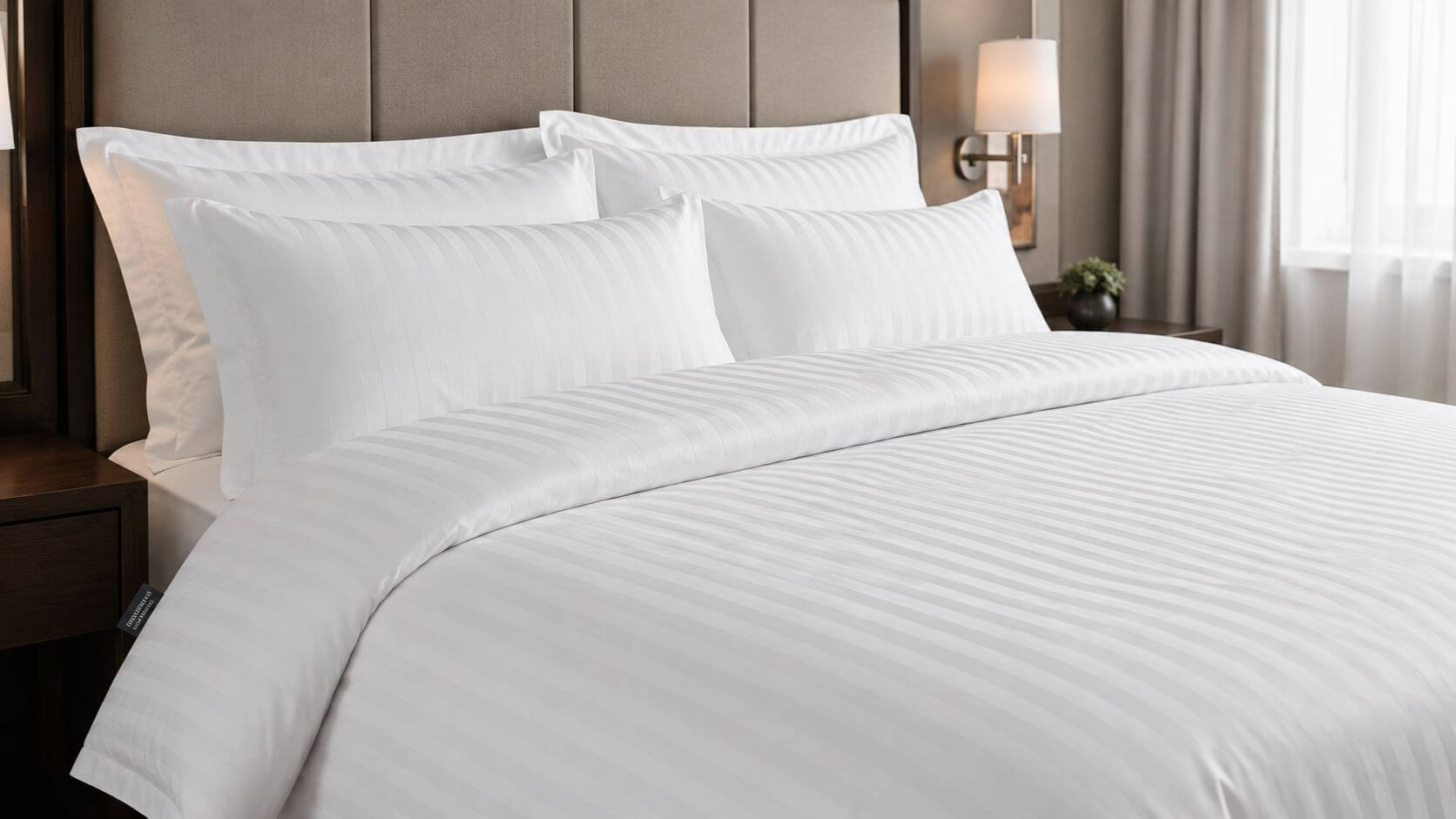
A freshly made hotel bed should look clean, feel comfortable and be ready for the next guest. But even with regular washing and careful handling, bed linen doesn’t last forever.
Sheets gradually lose their original appearance. Pillowcases may develop worn edges, while duvet covers can begin to show signs of thinning or damage.
So how do you know when it’s time to replace hotel bed linen?
There isn’t a fixed replacement schedule that works for every property. The answer depends on how frequently the linen is used, how it’s washed and the condition of the fabric.
Here’s what housekeeping teams should look for.
The easiest place to start is with a visual inspection.
Bed linen that has been used and washed repeatedly may begin to show changes in appearance or construction.
Common signs include:
A small defect might not seem important when a sheet is folded in storage. Once it’s spread across a bed, however, the damage becomes easier to notice.
Housekeeping teams should check the fabric before returning it to guest rooms.
Not every stain means a sheet needs replacing.
Some marks can be removed through the appropriate laundering process. Others remain visible despite following the recommended care instructions.
The important question is whether the linen still meets your property’s presentation and hygiene requirements.
White bedding can make differences in shade more noticeable, particularly when older and newer items are used together.
If a pillowcase or duvet cover remains visibly stained after suitable treatment, assess whether it should be withdrawn from guest use.
Avoid repeated treatments outside the manufacturer’s care instructions, as these may damage the fabric.
The main body of a sheet may look fine while the edges are beginning to wear.
During inspection, look closely at the hems, corners and stitched areas.
For pillowcases, check the opening and seams. For duvet covers, inspect the closure and stitching along the edges.
Loose threads do not always mean a product has reached the end of its useful life, but damaged seams deserve attention.
Where repairs are permitted by your property’s linen standards, assess whether the item can be repaired. Otherwise, remove it from circulation.
Changes in fabric feel can be another reason to review older bedding.
A sheet may become rougher or feel different from newer stock after repeated use and laundering.
However, fabric feel alone isn’t a reliable measure of its remaining lifespan.
The original material, weave, finishing and washing conditions all influence how bedding feels.
Compare older items with unused stock from the same range where possible. This provides a more meaningful reference than comparing entirely different fabrics.
It’s tempting to set a fixed rule, such as replacing all bed sheets after a certain number of months.
In practice, that approach overlooks several important factors.
A sheet used frequently in a busy property may experience more washing and handling than one used occasionally.
The fabric composition, construction and laundry process also affect its condition over time.
Rather than relying on a universal replacement period, hotels should establish an inspection routine based on actual use.
| Factor | Why It Matters |
|---|---|
| Frequency of use | Affects how often linen is handled and washed |
| Laundry process | Washing and drying conditions influence fabric wear |
| Fabric composition | Different materials have different characteristics |
| Fabric construction | Weave, yarn and finishing influence the textile |
| Storage conditions | Poor storage can affect linen condition |
| Handling | Daily collection and preparation contribute to wear |
Use these factors alongside regular inspections to decide when replacement is appropriate.
When reviewing bed linen, it’s easy to focus on sheets.
Pillowcases and duvet covers also need regular inspection.
Pillowcases come into frequent contact with skin and hair. Check their surface, seams and openings for staining and wear.
Duvet covers should be inspected for damaged stitching, fabric thinning and problems with their closures.
Keep a consistent approach across all bedding items rather than allowing one part of the bed to look noticeably older than the rest.
Laundry plays an important role in keeping bedding suitable for use.
The appropriate washing method depends on the fabric and the product’s care instructions.
Temperature, detergent, mechanical action and drying conditions can all influence the finished textile.
For example, washing a product at temperatures outside its recommended care instructions may affect its appearance or dimensions.
If your hotel uses a commercial laundry, make sure the laundry provider has the correct product specifications.
It’s also worth discussing any recurring problems, such as fabric damage or unexpected changes in size.
These observations may help identify whether a problem is related to the product, the laundering process or how the linen is handled.
A consistent inspection process helps housekeeping teams identify bedding that should no longer be returned to guest rooms.
You don’t need a complicated system.
A simple checklist can be used when linen comes back from the laundry or before it is placed on a bed.
| Inspection Point | What to Check |
|---|---|
| Cleanliness | No visible stains or contamination |
| Fabric condition | No holes, tears or excessive thinning |
| Stitching | Seams and hems are intact |
| Appearance | Colour and finish meet property standards |
| Size | Suitable dimensions for the intended bed |
| General condition | Appropriate for continued guest use |
Items that do not meet the required standard should be separated for further assessment.
Where hygiene or infection-prevention procedures apply, follow the property’s established policies.
A hotel shouldn’t have to wait until linen becomes unusable before thinking about replacements.
Keeping a record of withdrawn items helps purchasing and housekeeping teams understand how quickly stock is being used.
Start by recording:
These records make it easier to plan future orders.
For larger properties, tracking replacement rates by product type may also reveal patterns that deserve investigation.
Not always.
If most of your existing linen remains suitable for use, replacing damaged items individually may be more practical.
However, changing to a different fabric, shade or design can create noticeable differences across guest rooms.
Before introducing a new range, compare its specifications with your existing stock.
Check fabric composition, thread count, weight and dimensions where relevant.
Thornton Mills offers several bedding options through its bed linen collection, including plain and satin stripe designs.
Review the individual product specifications when considering replacement stock.
There is no universal lifespan for hotel bedding. It depends on the material, frequency of use, laundry conditions and fabric construction. Regular inspection provides a more reliable basis for replacement decisions.
Common signs include thinning fabric, holes, frayed hems, damaged stitching and persistent stains or discolouration.
If staining remains visible after appropriate laundering and treatment, assess the item against your property’s presentation and hygiene standards. Linen that fails those standards should be removed from guest use.
Not necessarily. Thread count measures thread density, but durability also depends on yarn, construction, finishing and laundering conditions.
Some minor defects may be repairable. Whether an item should return to guest use depends on the type of damage and your property’s linen standards.
Follow product care instructions, use appropriate laundry procedures, inspect stock regularly and keep records of damage and replacement reasons.
Hotel bed linen should be replaced based on its condition and suitability for use, rather than following an arbitrary calendar deadline.
Regular checks help identify worn items before they return to guest rooms. Accurate records also make it easier to plan replacement stock.
For the currently available 130 TC polycotton bedding range, review Valencia Hotel Bed Linen and its in-stock carton variations. You can also explore the wider bed linen buying guide.
Enter your email address to access the Thornton Mills profile PDF and explore our hospitality textile range.